Equipment failure isn’t the biggest danger in industrial environments—improper maintenance procedures are. One misstep during servicing can lead to catastrophic injury or fatality. That’s why a solid lockout tagout procedures template isn’t just a compliance document—it’s a frontline defense mechanism. Yet, most templates found online are either too vague or overly complex, rendering them useless in real-world applications.
A well-designed LOTO (Lockout/Tagout) template should be actionable, standardized, and adaptable across departments and equipment types. This guide delivers exactly that: a pragmatic, ready-to-use framework backed by OSHA standards and field-tested workflow logic.
What a Lockout Tagout Procedures Template Should Include
Forget generic checklists. A functional LOTO template must guide workers through not just what to do, but how and why. The core components include:
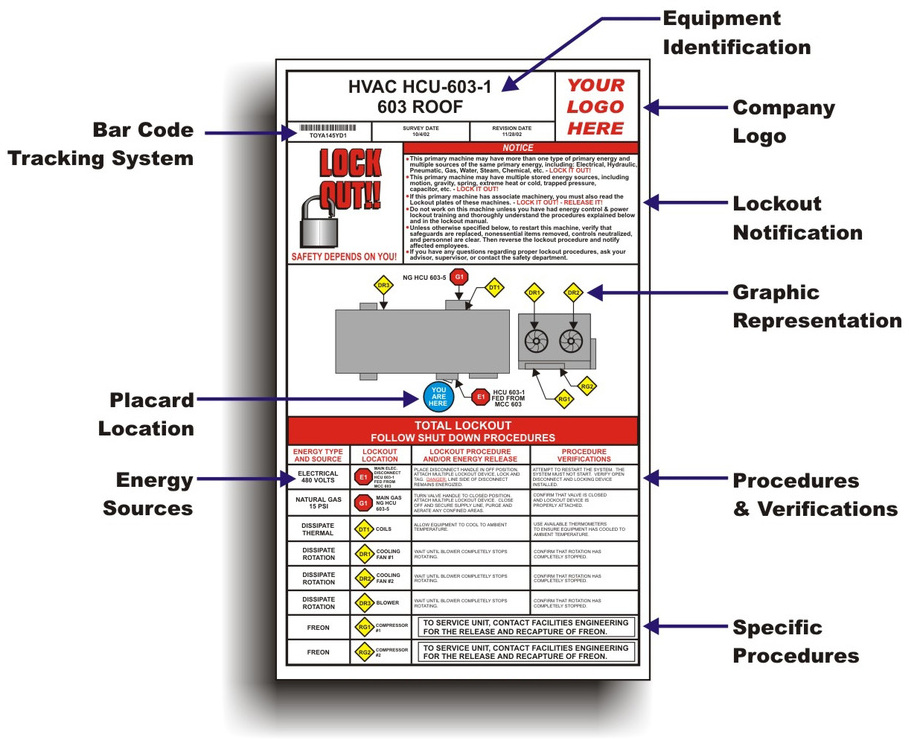
- Equipment Identification: Name, location, unique ID
- Energy Sources: Electrical, hydraulic, pneumatic, thermal, chemical, gravitational
- Authorized Personnel: Names and roles cleared for execution
- Step-by-Step Isolation Process: From shutdown to lock application
- Verification of Zero Energy: How to confirm the machine is truly de-energized
- Sign-Off and Release Protocol: Steps to safely return equipment to service
A template missing any of these elements risks non-compliance and endangers lives. For example, failing to list all energy sources (like stored pressure in a hydraulic line) has led to multiple OSHA-cited incidents.
Insight: A LOTO template isn’t a one-time document. It’s a living process that requires review after equipment modifications or incidents.
Further reading: OpenAI Building a Phone with AI Agents Over Apps.
Why Most Templates Fail in Real Operations
You’ve seen them—PDFs buried in safety folders, rarely updated, and never referenced during actual shutdowns. These templates fail for three reasons:
- Too Generic: "Turn off machine" isn’t enough. Real templates specify breaker numbers, valve positions, and bleed-off procedures.
- Not Visual Enough: Text-heavy documents slow down comprehension under pressure.
- Lack of Accountability Trail: No space for signatures, timestamps, or verification notes.
A maintenance tech in a noisy plant doesn’t have time to interpret vague language. If your template says “isolate power,” but doesn’t specify which disconnect to use, it’s a liability.
Real Example: At a Midwest packaging facility, a worker restarted a conveyor after servicing because the LOTO form didn’t clearly indicate who applied the lock. The result: a crushed hand. The OSHA investigation revealed the procedure template was a generic industry sample—never tailored to their equipment.
A Practical Lockout Tagout Procedures Template (Ready to Adapt)
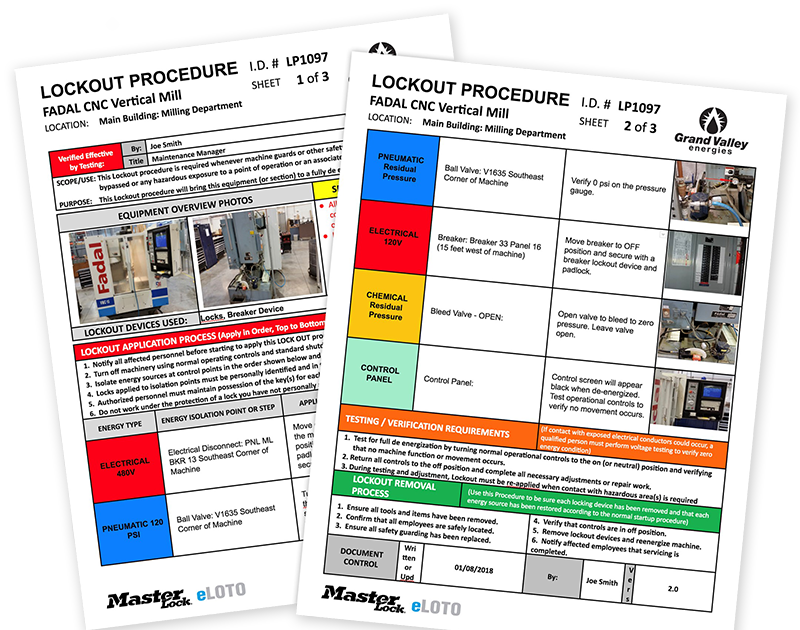
Below is a field-proven, modular LOTO template. Print it, customize it, and use it as the foundation for your site-specific procedures.
#### LOTO Procedure: [Equipment Name] Location: [e.g., Production Floor, Line 3] Equipment ID: [e.g., CONV-2201]
Energy Sources Present: - Electrical (480V Main Disconnect – Panel B3) - Pneumatic (Line Pressure – Valve V12) - Gravitational (Load in Elevated Position – Use Support Pins)
Authorized Personnel: - John Doe (Maintenance Tech) - Maria Lopez (Lead Operator)
#### Step-by-Step Isolation Process
- Notify Operations
- - Inform shift supervisor of upcoming shutdown.
- - Post "In Lockout" sign at operator station.
- Normal Shutdown
- - Press E-Stop on HMI.
- - Allow machine to come to complete rest (30-second wait).
- Isolate Energy Sources
- - Open main disconnect (Breaker #B3-1) and verify off.
- - Close and lock pneumatic shutoff valve (V12).
- - Engage mechanical support pins on lift mechanism.
- Apply Locks and Tags
- - Each authorized person applies personal lock and tag.
- - Tag must include: Name, Date, Reason, Expected Duration.
- Verify Zero Energy
- - Attempt to restart via HMI (should not start).
- - Use voltage tester on control panel leads.
- - Bleed residual pressure at test port TP-7.
- Begin Maintenance
- - Only proceed after verification is confirmed.
- Clear Work Area & Remove Tools
- - Confirm all tools removed before re-energizing.
- Remove Locks & Re-energize
- - Each worker removes only their own lock.
- - Notify supervisor: “LOTO complete, ready to restart.”
| Sign-Off Section | |||
|---|---|---|---|
| ------ | ------------- | ---------- | ------ |
| Energy Isolation | |||
| Zero Energy Verified | |||
| Maintenance Complete | |||
| Equipment Restarted |
Keep completed forms for 30 days for audit purposes.
Common Mistakes That Invalidate LOTO Procedures
Even with a solid template, execution errors undermine safety. Watch for these recurring issues:
- Group Lockout Confusion: Multiple workers using a single lock instead of individual locks.
- Temporary Re-energizing: Restarting equipment mid-job to test—without full re-LOTO.
- Tag Reliance Over Locks: Using tags alone on equipment that allows lock application.
- Skipping Verification: Assuming the machine is dead without testing.
- Inadequate Training: New hires using the template without hands-on drills.
Pro Tip: Run quarterly “surprise” LOTO audits. Have a safety officer observe a shutdown and score adherence to the template. Use gaps as training moments.
When to Customize Your Template
A one-size-fits-all template doesn’t work across equipment types. Customize based on:
- Energy Complexity: A CNC machine with multiple power sources needs more detail than a standalone mixer.
- Frequency of Maintenance: Daily greasing vs. annual overhaul demand different documentation depth.
- Work Environment: Outdoor equipment may need weather-resistant tags and extra verification steps.
For high-risk systems (e.g., robotic cells, high-pressure lines), add a pre-job risk assessment box to the template:
“Before lock application: - Is there stored energy? - Are gravity hazards controlled? - Is the isolation point clearly marked?”
Top 5 Tools to Support Your LOTO Template Implementation
No template works in isolation. Pair it with these tools to ensure adoption and compliance:
| Tool | Purpose | Why It Matters |
|---|---|---|
| Brady LOTO Stations | Centralized lock/tag storage | Ensures availability and discourages bypassing |
| Digital LOTO Apps (e.g., LockOut TagOut Pro) | Mobile procedure access and sign-off | Reduces paperwork and improves audit trails |
| Energy Isolation Labels | Visual identifiers on breakers/valves | Speeds up isolation during emergencies |
| Training Simulators (e.g., LAB Midwest) | Hands-on LOTO drills | Builds muscle memory without risk |
| Audit Checklists (Custom PDF/Printed) | Periodic compliance verification | Catches drift from standard procedures |
Digital apps are gaining traction, especially for facilities with rotating shifts and remote equipment. However, always maintain a printed backup—technology fails when power is down.
Integrating the Template into Your Safety Culture
A LOTO template only works if it’s used. To embed it into daily operations:
- Conduct Monthly Drills: Simulate breakdowns and require full LOTO execution.
- Assign Template Ownership: One safety officer per department updates and reviews procedures.
- Link to PTW (Permit to Work): Tie LOTO completion to work authorization.
- Display Near Equipment: Laminate and mount a summary version at each machine.
Case Study: A food processing plant reduced maintenance incidents by 70% within a year by pairing a detailed LOTO template with mandatory buddy checks. Every lockout required a second worker to initial the verification step.
Final Thoughts: A Template Is Only as Strong as Its Execution
A lockout tagout procedures template is more than an OSHA requirement—it’s a roadmap for safe work. The best templates are clear, specific, and integrated into daily routines. They don’t live in a binder; they’re in the hands of technicians during every shutdown.
Start with the template above. Customize it to your equipment. Train your team. Audit regularly. Because when the pressure’s on and a machine needs repair, there’s no room for guesswork—only a reliable, tested process.
Frequently Asked Questions
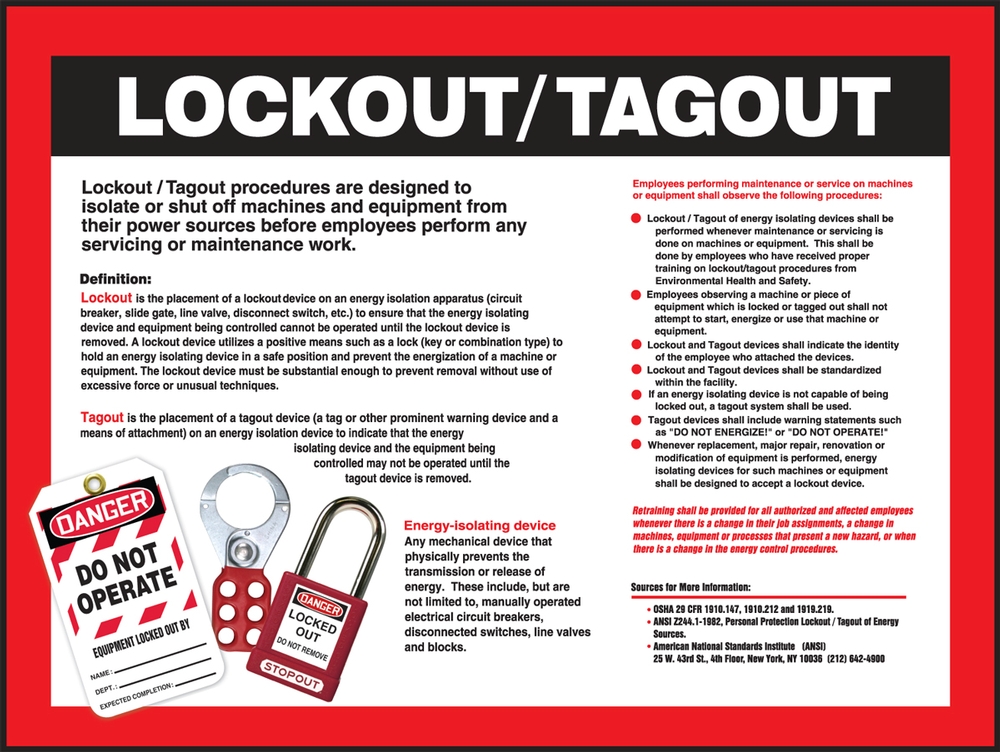
What is the difference between lockout and tagout? Lockout physically prevents energy re-energization using a lock. Tagout uses a warning tag alone—only allowed when a lock can’t be applied.
Who can perform lockout tagout procedures? Only authorized employees trained in energy control procedures. Operators may assist but cannot lead LOTO unless certified.
Do I need a separate LOTO template for each machine? Yes, each piece of equipment should have a tailored procedure based on its energy sources and isolation points.
Can digital signatures be used on LOTO forms? Yes, if the system ensures authenticity, timestamping, and prevents duplication—common in digital LOTO platforms.
How often should LOTO procedures be reviewed? Annually, or after any equipment modification, incident, or change in staffing.
Are LOTO templates required by OSHA? OSHA 1910.147 requires documented procedures—templates are the most efficient way to comply.
What happens if a worker forgets to remove their lock? A formal "lock removal" process exists: supervisor verification, attempts to contact the worker, and documented override using a master key—never forced removal.
FAQ
What should you look for in Lockout Tagout Procedures Template That Actually Works? Focus on relevance, practical value, and how well the solution matches real user intent.
Is Lockout Tagout Procedures Template That Actually Works suitable for beginners? That depends on the workflow, but a clear step-by-step approach usually makes it easier to start.
How do you compare options around Lockout Tagout Procedures Template That Actually Works? Compare features, trust signals, limitations, pricing, and ease of implementation.
What mistakes should you avoid? Avoid generic choices, weak validation, and decisions based only on marketing claims.
What is the next best step? Shortlist the most relevant options, validate them quickly, and refine from real-world results.